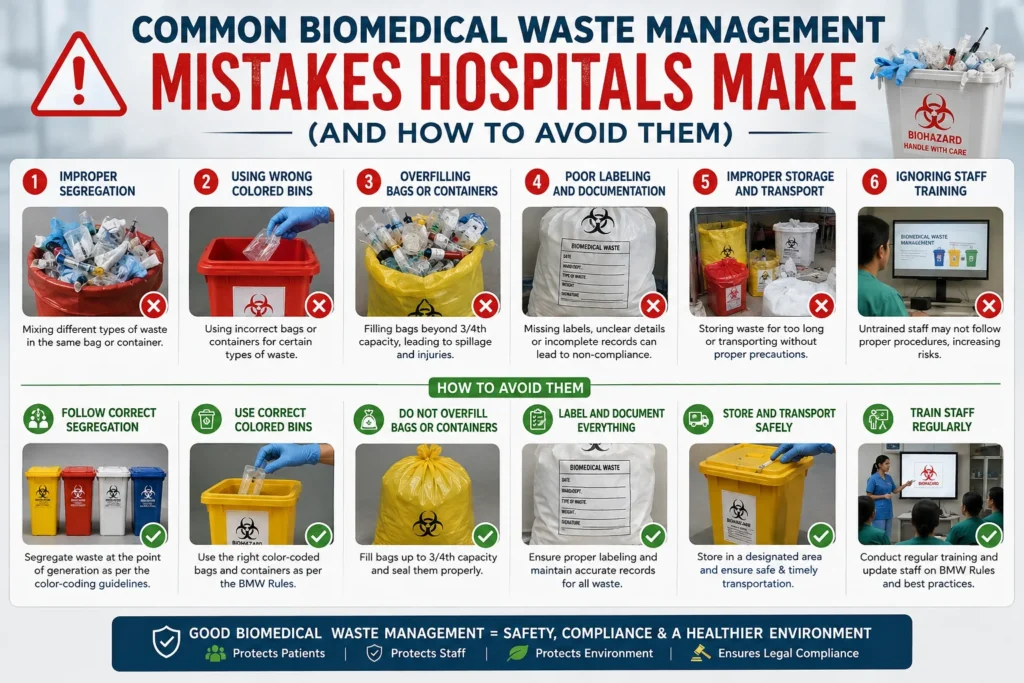
Biomedical waste management is an essential part of every healthcare facility’s infection prevention and environmental safety strategy. Hospitals, clinics, diagnostic laboratories, dental practices, blood banks, and other healthcare establishments generate a wide range of biomedical waste daily. When this waste is managed incorrectly, it can lead to healthcare-associated infections, occupational injuries, environmental pollution, legal penalties, and increased operational costs.
While many healthcare facilities have biomedical waste management systems in place, common mistakes continue to occur due to inadequate training, poor segregation practices, lack of monitoring, or outdated procedures. Even a single error such as placing infectious waste in the wrong container or overfilling a sharps box can compromise safety and regulatory compliance.
In this guide, we’ll explore the most common biomedical waste management mistakes hospitals make, explain why they occur, and provide practical solutions to help healthcare facilities improve compliance and protect patients, staff, and the environment.
Biomedical waste includes infectious materials, sharps, pathological waste, laboratory cultures, pharmaceutical waste, contaminated plastics, and chemical waste generated during patient care and medical procedures. Proper management of this waste is critical because it helps:
An effective biomedical waste management program starts with awareness, training, and consistent implementation.

Improper waste management can result in:
Many of these issues are preventable through proper waste segregation, staff education, and regular monitoring.


The Mistake
One of the most common errors is disposing of infectious or hazardous waste in general waste bins.
Examples include:
Why It Happens
How to Avoid It

The Mistake
Healthcare workers often place waste in the wrong color-coded container.
Examples:
Why It Matters
Incorrect segregation affects downstream treatment and increases processing costs.
Solution
Display biomedical waste color coding charts in every department and conduct refresher training sessions.

The Mistake
Some staff collect waste first and segregate it later.
Why It’s Dangerous
Once different waste types are mixed, safe separation becomes difficult and increases exposure risks.
Best Practice
Segregate waste immediately at the point of generation.

The Mistake
Sharps containers are often filled beyond their recommended capacity.
Risks
Prevention
Replace sharps containers before they become completely full and inspect them regularly.

The Mistake
Healthcare workers recap needles after use.
Risks
Recapping significantly increases the risk of accidental needle-stick injuries.
Best Practice
Dispose of used needles immediately into approved sharps containers without recapping.

The Mistake
Many hospitals provide training only during employee induction.
Why It Happens
Solution
Provide regular training on:

The Mistake
Waste handlers sometimes work without proper protective equipment.
Common Issues
Prevention
Ensure PPE is readily available and enforce its use through routine supervision.

The Mistake
Waste bags and containers are sometimes transported without proper labels.
Why It Matters
Incorrect labeling makes waste tracking difficult and increases the risk of mishandling.
Best Practice
Label all biomedical waste containers with:
The Mistake
Broken bins, leaking bags, or cracked sharps containers continue to be used.
Risks
Solution
Inspect containers daily and replace damaged equipment immediately.

The Mistake
Biomedical waste is stored in unsuitable locations.
Examples include:
Best Practice
Store waste only in designated, secure, and well-ventilated storage areas with restricted access.

The Mistake
Waste remains in clinical areas for extended periods.
Consequences
Prevention
Implement a fixed waste collection schedule and monitor adherence.

The Mistake
Hospitals fail to maintain complete waste management records.
Missing documentation may include:
Solution
Use standardized record-keeping systems and perform routine documentation audits.

The Mistake
Many facilities only review waste management practices during external inspections.
Why This Is a Problem
Issues remain undetected until they become serious compliance concerns.
Best Practice
Conduct periodic internal audits covering:

The Mistake
Healthcare workers are unsure how to manage spills involving infectious materials.
Risks
Delayed cleanup increases contamination and exposure.
Prevention
Develop spill response protocols and ensure staff know how to use spill kits correctly.

The Mistake
Some healthcare facilities fail to verify whether waste collection and treatment providers are properly authorized.
Risks
Best Practice
Partner only with authorized biomedical waste treatment and disposal facilities and retain documentation of waste collection and disposal.

Hospitals can strengthen compliance by:

To build a safe and compliant waste management system:

Use this checklist to assess your facility:

What is the most common biomedical waste management mistake?
Mixing biomedical waste with general waste is one of the most common mistakes and can significantly increase health risks and disposal costs.

Why is biomedical waste segregation important?
Proper segregation reduces infection risks, improves worker safety, ensures appropriate treatment, and helps healthcare facilities comply with regulatory requirements.

How often should hospital staff receive biomedical waste management training?
Training should be provided during employee induction and reinforced through regular refresher sessions, especially when procedures or regulations change.

Why should sharps containers never be overfilled?
Overfilled containers increase the likelihood of accidental needle-stick injuries and unsafe handling.

How can hospitals improve biomedical waste compliance?
Hospitals should combine staff training, routine audits, proper segregation, accurate documentation, PPE usage, and partnerships with authorized waste treatment providers.

Biomedical waste management is far more than a regulatory obligation, it is a cornerstone of patient safety, occupational health, and environmental protection. The most common mistakes, such as poor segregation, improper sharps handling, inadequate training, delayed collection, and incomplete documentation, are largely preventable with the right systems in place.
By investing in staff education, standardizing waste handling procedures, conducting regular audits, and fostering a culture of accountability, healthcare facilities can reduce risks, improve operational efficiency, and maintain long-term compliance.
Preventing small errors today helps avoid serious health, environmental, and legal consequences tomorrow.