Healthcare facilities generate biomedical waste every day from used syringes and blood-soaked dressings to laboratory cultures and pharmaceutical waste. If this waste is not handled correctly, it can spread infections, harm healthcare workers, pollute the environment, and lead to serious legal consequences.
To ensure safe disposal, India has established the Bio-Medical Waste Management Rules, 2016, along with subsequent amendments issued by the Ministry of Environment, Forest and Climate Change (MoEFCC). These rules define how biomedical waste should be segregated, collected, transported, treated, and disposed of by healthcare facilities.
Whether you manage a hospital, clinic, diagnostic laboratory, dental practice, blood bank, veterinary hospital, or research institution, understanding these regulations is essential for maintaining compliance and protecting public health.
This guide explains everything healthcare facilities need to know about biomedical waste management in India in 2026.

Biomedical waste refers to any waste generated during the diagnosis, treatment, immunization, or research involving humans or animals, as well as waste produced during biological testing or healthcare activities.
Examples include:
Unlike general municipal waste, biomedical waste may contain infectious agents, hazardous chemicals, pharmaceuticals, or sharp objects that require specialized handling and disposal.

Improper biomedical waste disposal can have severe consequences for healthcare workers, patients, waste handlers, and the environment.
Potential risks include:
Effective biomedical waste management reduces these risks while supporting a safer healthcare environment.

India introduced comprehensive biomedical waste regulations to standardize waste handling practices across healthcare facilities.
The current framework is based on:
The rules aim to:

The rules apply to virtually every healthcare establishment that generates biomedical waste.
These include:
If biomedical waste is generated during patient care, the facility is responsible for ensuring proper management.

Biomedical waste includes a variety of materials, each requiring different handling procedures.
Common categories include:
| Category | Examples |
| Human anatomical waste | Tissues, organs, body parts |
| Animal anatomical waste | Veterinary tissues |
| Soiled waste | Blood-soaked cotton, dressings |
| Sharps | Needles, scalpels, blades |
| Pharmaceutical waste | Expired medicines |
| Microbiology waste | Laboratory cultures |
| Plastic waste | IV sets, catheters, syringes (without needles) |
| Glass waste | Broken medicine vials |
| Liquid waste | Laboratory liquids |
| Chemical waste | Disinfectants and laboratory chemicals |
Proper identification of waste categories is the first step toward compliance.

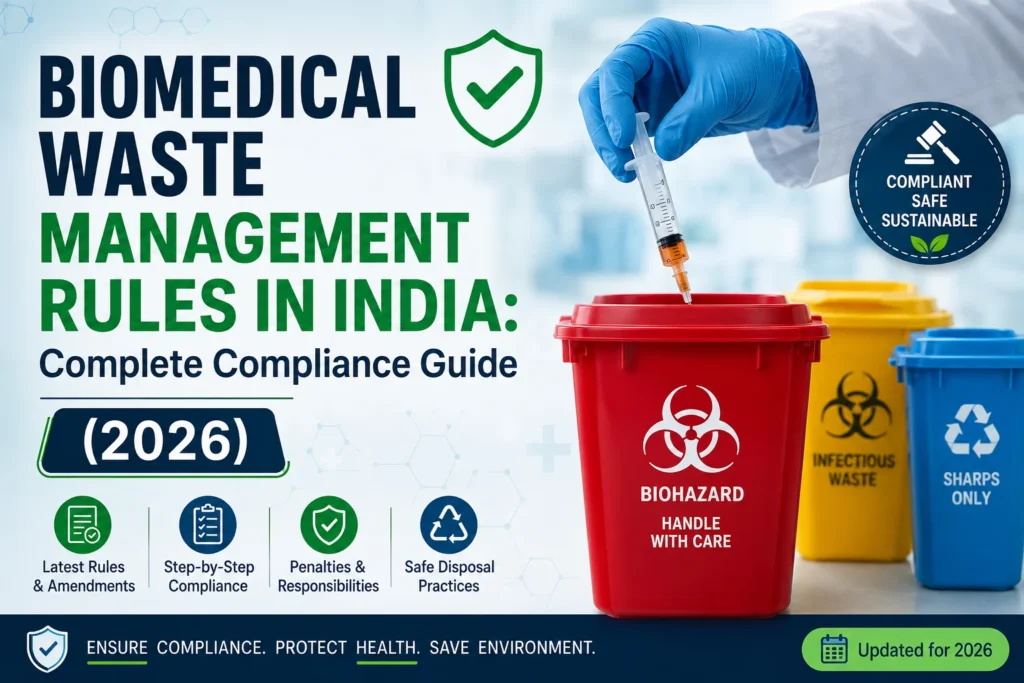
Segregation begins with the correct use of color-coded containers.
| Color | Waste Type | Treatment Method |
| Yellow | Human anatomical waste, soiled waste, microbiology waste, expired medicines | Incineration or deep burial (where permitted) |
| Red | Contaminated recyclable plastics such as IV sets, tubing, catheters, gloves | Autoclaving/microwaving followed by recycling |
| White (Translucent) | Sharps including needles, scalpels, blades | Sterilization followed by shredding or encapsulation |
| Blue | Glassware, medicine vials, ampoules, metallic implants | Disinfection and recycling |
Using incorrect bins increases contamination risks and may lead to regulatory action.

Waste is generated during diagnosis, treatment, surgery, laboratory testing, vaccination, and patient care.
Waste should be placed immediately into the appropriate color-coded container at the point of generation.
Segregation should never be delayed.
Trained housekeeping personnel collect waste using designated trolleys while wearing appropriate personal protective equipment (PPE).
Biomedical waste should be stored in a secure, designated area before collection by an authorized biomedical waste treatment facility.
Storage areas should:
Waste should be transported in leak-proof, labeled containers using dedicated vehicles that prevent spills or cross-contamination.
Depending on the waste category, treatment may include:
After treatment, waste is disposed of according to approved environmental guidelines, minimizing risks to public health and the environment.

Healthcare facilities play a central role in biomedical waste compliance.
Key responsibilities include:

Healthcare workers handling biomedical waste should use appropriate PPE.
Recommended PPE includes:
PPE reduces the risk of infections and occupational injuries.

Biomedical waste storage should comply with regulatory requirements.
Storage areas should:
Waste should not be allowed to accumulate unnecessarily.

Internal transportation should follow designated routes that minimize exposure to patients and visitors.
Containers should be:
Dedicated transportation equipment should be cleaned after each use.

Different waste categories require different treatment technologies.
Common methods include:
Incineration
Used for pathological and infectious waste requiring complete destruction.
Autoclaving
Uses steam sterilization to disinfect contaminated materials before recycling or disposal.
Microwaving
Reduces microbial contamination through heat generated by microwave energy.
Chemical Disinfection
Suitable for liquid waste and selected contaminated materials.
Shredding
Performed after sterilization to prevent unauthorized reuse of medical plastics.
Healthcare facilities should maintain comprehensive documentation, including:
Proper documentation demonstrates compliance during inspections.

Regular audits help identify gaps before they become compliance issues.
Audit areas include:
Many hospitals conduct quarterly or annual internal audits alongside regulatory inspections.

Healthcare facilities often struggle with:
Addressing these issues proactively can improve safety and regulatory compliance.

Failure to comply with biomedical waste management regulations can result in:
Maintaining compliance protects both the organization and the communities it serves.

Healthcare facilities can strengthen their waste management systems by:
Continuous improvement helps reduce risks and supports sustainable healthcare operations.

Frequently Asked Questions
What is biomedical waste?
Biomedical waste is waste generated during diagnosis, treatment, immunization, research, or healthcare activities that may be infectious, hazardous, or require specialized disposal.
Who is responsible for biomedical waste management?
Every healthcare facility generating biomedical waste is responsible for ensuring proper segregation, storage, transportation, treatment, and disposal in accordance with applicable regulations.
Why is waste segregation important?
Segregation prevents cross-contamination, improves worker safety, supports recycling where appropriate, and ensures each waste type receives the correct treatment.
What are the four biomedical waste color codes?
The standard color-coded categories are Yellow, Red, White (Translucent), and Blue, each designated for specific waste streams.
How often should staff receive biomedical waste management training?
Training should be provided during induction and refreshed periodically, with additional sessions whenever procedures or regulations change.

Samved Biomedical waste management is a critical responsibility for every healthcare facility. By following the Bio-Medical Waste Management Rules, implementing effective segregation practices, training staff, and maintaining accurate records, organizations can protect patients, healthcare workers, waste handlers, and the environment.
Compliance is more than meeting regulatory requirements it reflects a commitment to safe, ethical, and sustainable healthcare. Establishing robust waste management practices today helps reduce risks, improve operational efficiency, and contribute to a healthier future for all.